 sales@zozen.com
- WhatsApp: 0086-18861589035
-
 sales@zozen.com
 Home >About
Us >News
Home >About
Us >News Part 1: How a Fire Tube Boiler Works and Why It Matters
A fire tube boiler is one of the most widely used steam generation systems in industry today. In this design, hot combustion gases travel through tubes that are submerged in water, transferring heat to produce steam or hot water. Its straightforward structure, compact footprint, and relatively low cost make it the preferred choice for a broad range of applications, from food processing and pharmaceuticals to textile manufacturing and hospital heating.
However, not all fire tube boilers deliver the same performance. Understanding the different types of fire tube boiler available on the market is essential for making a smart procurement decision. The key distinctions among types of fire tube boiler designs — such as dry back versus wet back, horizontal versus vertical, and single-pass versus multi-pass configurations — directly impact thermal efficiency, maintenance frequency, and total cost of ownership. A well-informed buyer who knows the types of fire tube boiler and their respective strengths can avoid costly mistakes and ensure long-term reliability.
Part 2: A Detailed Look at the Major Types of Fire Tube Boiler
Among the various types of fire tube boiler, the wet back boiler and the dry back boiler are the two most common configurations. In a dry back boiler, the reversal chamber where flue gases change direction is lined with refractory material and sits outside the water jacket. This design has a lower initial cost but suffers from higher heat loss and requires regular refractory maintenance. In contrast, the wet back design submerges the reversal chamber in water, which absorbs heat directly and improves thermal efficiency by 2–3%. It also eliminates refractory maintenance, making it the more cost-effective choice over the boiler’s lifespan.
Another important distinction among types of fire tube boiler is the number of passes. Single-pass designs route flue gases through the furnace once, while two-pass and three-pass designs send gases through additional tube bundles, extracting more heat before exhaust. Vertical fire tube boilers, on the other hand, occupy minimal floor space and are suited for small-capacity applications. When evaluating types of fire tube boiler for a given project, buyers should consider capacity requirements, fuel availability, emission regulations, and installation space constraints.
Part 3: ZOZEN’s Fire Tube Boiler Series
When it comes to fire tube boilers, the WNS series is the backbone of ZOZEN’s product portfolio. Built around a unified three-pass wetback platform, the series spans four distinct models—each designed to serve a specific set of capacity and installation requirements:
WNS Series Steam Boiler
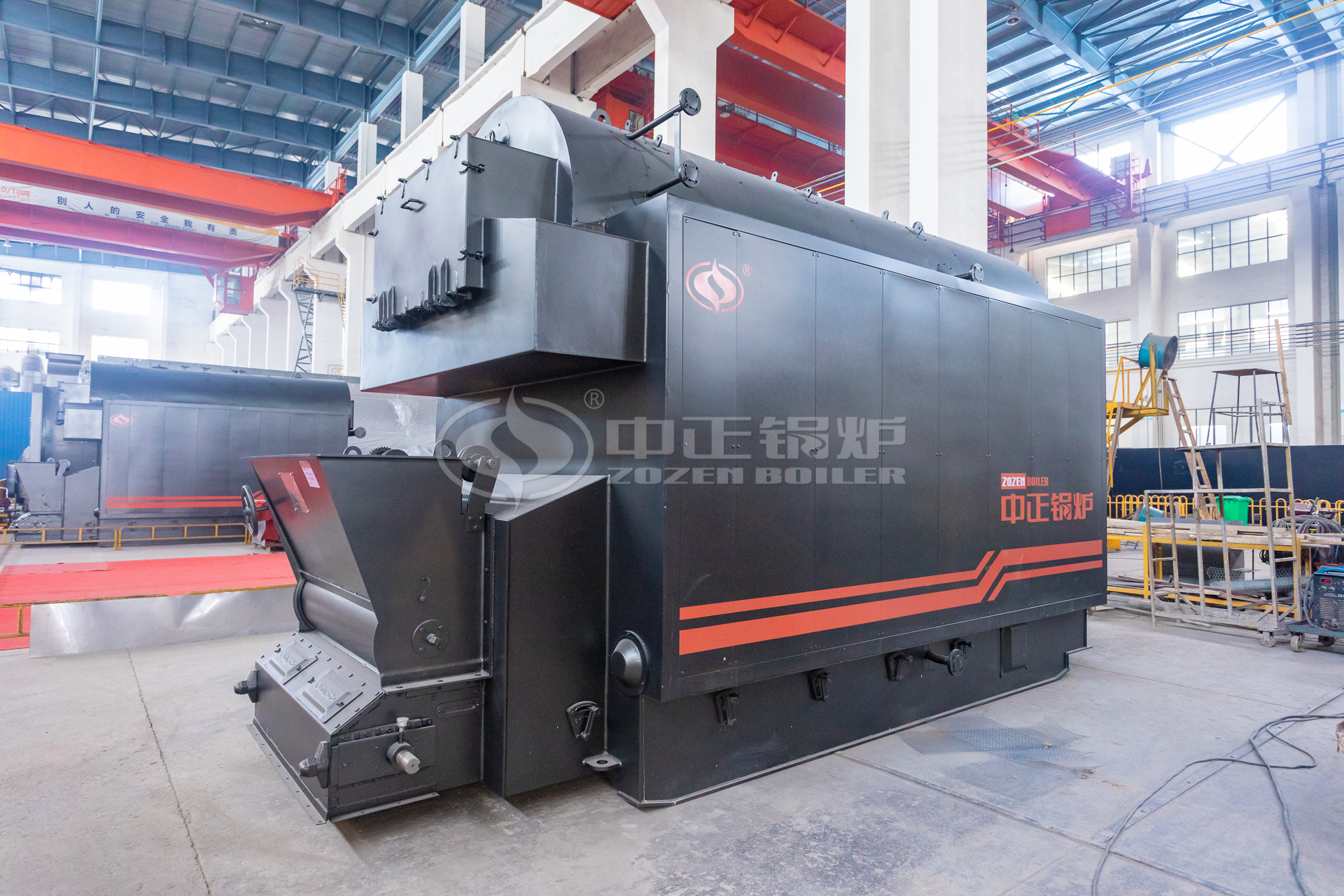
The WNS series is ZOZEN’s most representative horizontal fire tube steam boiler, built around a three-pass wetback design with a corrugated furnace and threaded smoke tubes. Available in capacities from 1 to 20 t/h with working pressures of 0.7 to 2 MPa, this model achieves a thermal efficiency of over 98%. It supports natural gas, coke oven gas, biogas, diesel, heavy oil, and light oil, making it one of the most versatile types of fire tube boiler on the market. The large-volume furnace ensures sufficient steam storage, while the fully automatic control system enables unattended operation and remote monitoring.
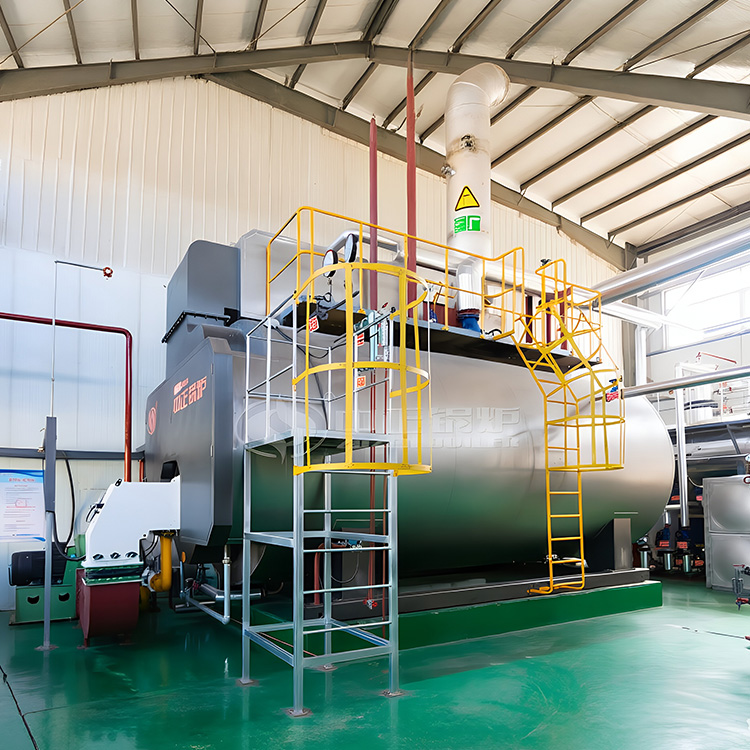
Types of fire tube boiler—WNS Series Fire Tube Steam Boiler
WNS Series Hot Water Boiler
Designed for heating applications, ZOZEN’s WNS hot water boiler covers a thermal capacity range of 0.7 to 14 MW with a working pressure of 0.7 to 1.25 MPa. It shares the same three-pass wetback architecture and corrugated furnace as the steam variant, delivering a thermal efficiency exceeding 95%. This model is widely adopted in hospitals, hotels, and district heating systems where stable, continuous hot water supply is critical. Like all ZOZEN boilers, it features NOx emissions as low as 30 mg/Nm³ for environmental compliance.
WNS Skid-Mounted Steam Boiler
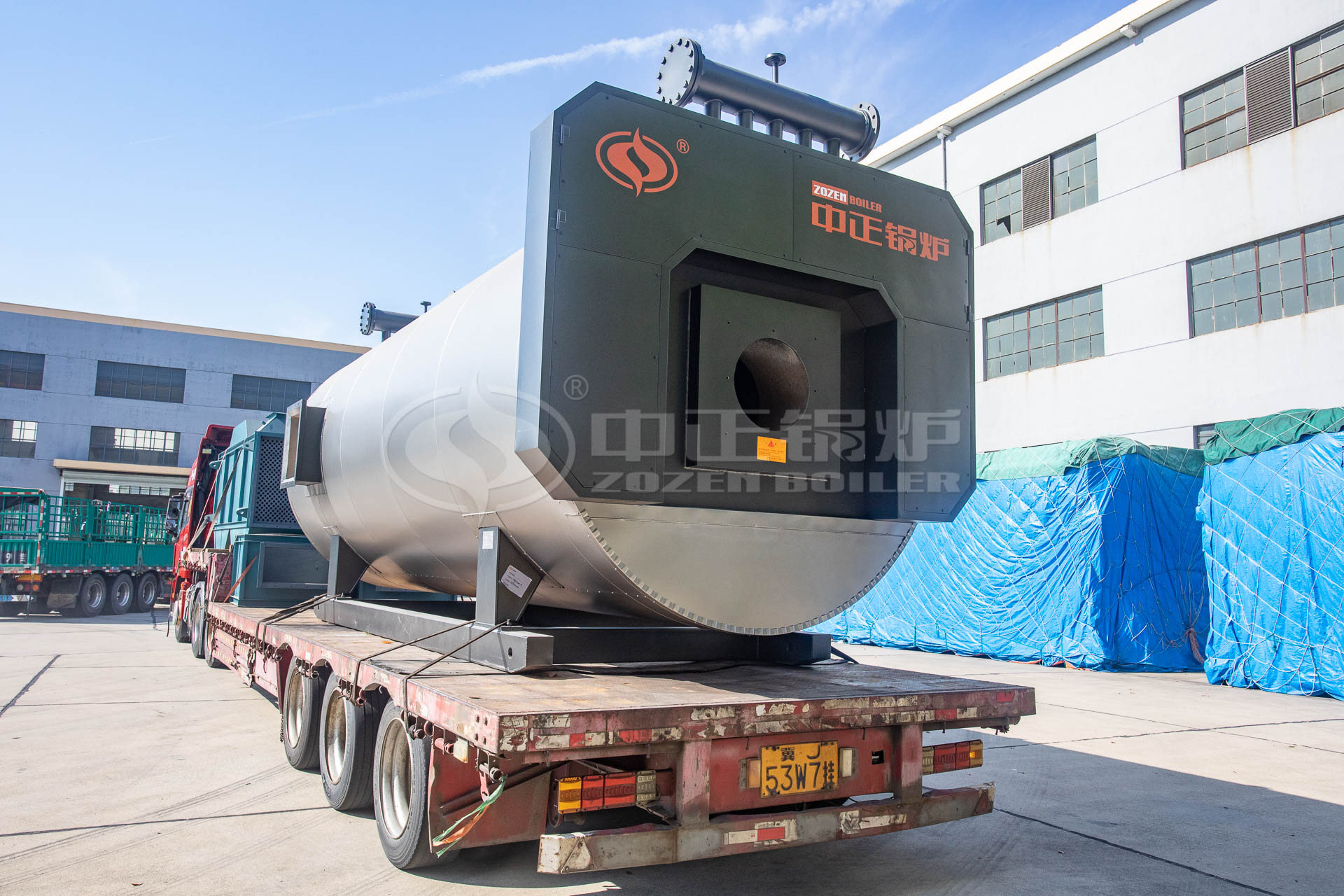
ZOZEN’s skid-mounted steam boiler integrates the burner, control system, and all auxiliary components onto a single steel base frame, covering 1 to 4 t/h with working pressures of 1.0 to 1.6 MPa. This pre-assembled design eliminates on-site installation — users only need to connect water, electricity, and gas to start operation within one day. It achieves a thermal efficiency above 92%. The compact, mobile structure makes it ideal for temporary construction sites, remote factories, and pet food production facilities with limited installation space. Customized ZOZEN burners are matched to the boiler system for optimal combustion performance and integrated control.
WNS Skid-Mounted Hot Water Boiler
For projects that demand both fast deployment and reliable heating, ZOZEN’s skid-mounted hot water boiler delivers the same three-pass wetback design in a portable package. Covering a thermal capacity range from 0.7 to 2.8 MW with a working pressure of 1.0 MPa, this unit achieves over 93% thermal efficiency through its corrugated furnace and threaded smoke tubes. No complex on-site assembly is required — connect water, electricity, and fuel, and the system is operational within a day. The skid-mounted frame also allows easy relocation, making it a practical choice for hotels, hospitals, chemical plants, and temporary heating stations.
Part 4: Why ZOZEN’s Wet Back Design Outperforms Other Types of Fire Tube Boiler
Across all four WNS series models, ZOZEN exclusively adopts the wet back design rather than the dry back alternative — and for good reason. The water-cooled reversal chamber in a wet back boiler absorbs heat that would otherwise be lost through refractory walls, boosting efficiency by an additional 2–3% compared to dry back types of fire tube boiler. It also eliminates the need for heavy refractory doors, reducing thermal stress on the tube sheet and virtually removing refractory-related maintenance costs.
Two core technologies further distinguish ZOZEN’s fire tube boilers. First, the corrugated furnace increases the heat transfer area and strengthens the furnace structure, reducing thermal expansion stress and extending service life. Second, the threaded smoke tubes prolong flue gas residence time, achieving a heat transfer efficiency 1.4 times higher than ordinary smooth tubes.
Backed by these advanced technologies and over 30 years of manufacturing experience, ZOZEN holds a Grade A boiler license, ASME “S” and “U” stamps, and ISO 9001:2015 certification. With a 150,000-square-meter production facility featuring automated welding robots, ZOZEN ensures consistent quality across all types of fire tube boiler it produces. The company serves more than 15,580 customers worldwide, supported by a global service network covering solution design, on-site installation guidance, operator training, and after-sales support. For plant managers and procurement professionals seeking a dependable, high-efficiency fire tube boiler, ZOZEN delivers proven technology, international certifications, and long-term value.



I want to comment