 sales@zozen.com
- WhatsApp: 0086-18861589035
-
 sales@zozen.com
 Home >About
Us >News
Home >About
Us >News As environmental regulations continue to tighten and food manufacturers pursue higher production standards, energy system upgrades have become a strategic priority. Recently, a well-known tomato products company officially launched an expansion project for a 10,000-ton-per-year tomato paste production line. At this critical stage of its coal-to-gas transformation, the company selected ZOZEN Boiler to provide a combined heating solution based on the SZS series and WNS series gas-fired steam boilers. This upgrade not only responds to environmental policies but also lays a solid thermal foundation for expanded capacity and improved product quality.
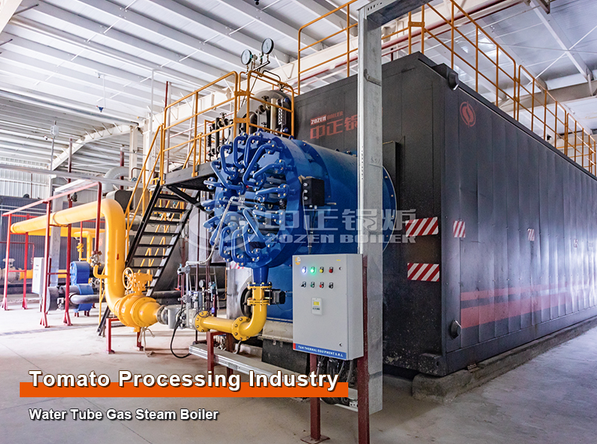
ZOZEN 6 t/h WNS and 35 t/h SZS gas steam boiler
The company’s original energy system consisted of three 10 t/h coal-fired steam boilers, the company decided to dismantle the coal-fired facilities and establish a new gas-fired steam boiler system. In addition to environmental compliance, the enterprise required flexible operation. Since tomato processing is seasonal, there is no need for heating during the winter off-season. The new system therefore had to offer fast start-up, stable load adjustment, and efficient operation under varying production conditions.
Rather than recommending a single large-capacity unit, ZOZEN’s technical team designed a practical “main plus auxiliary” configuration tailored to the plant’s actual production layout. The solution combines one 35 t/h SZS gas steam boiler with one 6 t/h WNS gas steam boiler, enabling flexible steam supply management.
The SZS35-1.6-Y(Q) gas steam boiler serves as the primary unit, supporting the 1,000-ton-per-day production line during peak demand. This double-drum, D-type boiler features a full membrane water wall structure and a spacious furnace design. Equipped with an advanced low-NOx burner, it ensures complete fuel combustion while effectively controlling nitrogen oxide emissions to meet stringent environmental standards. The generous steam-water space created by the double-drum structure guarantees high steam quality with low moisture content, which is particularly important for vacuum concentration processes in tomato paste production. During high-load operation, the SZS unit maintains stable pressure and output, ensuring uninterrupted large-scale processing.
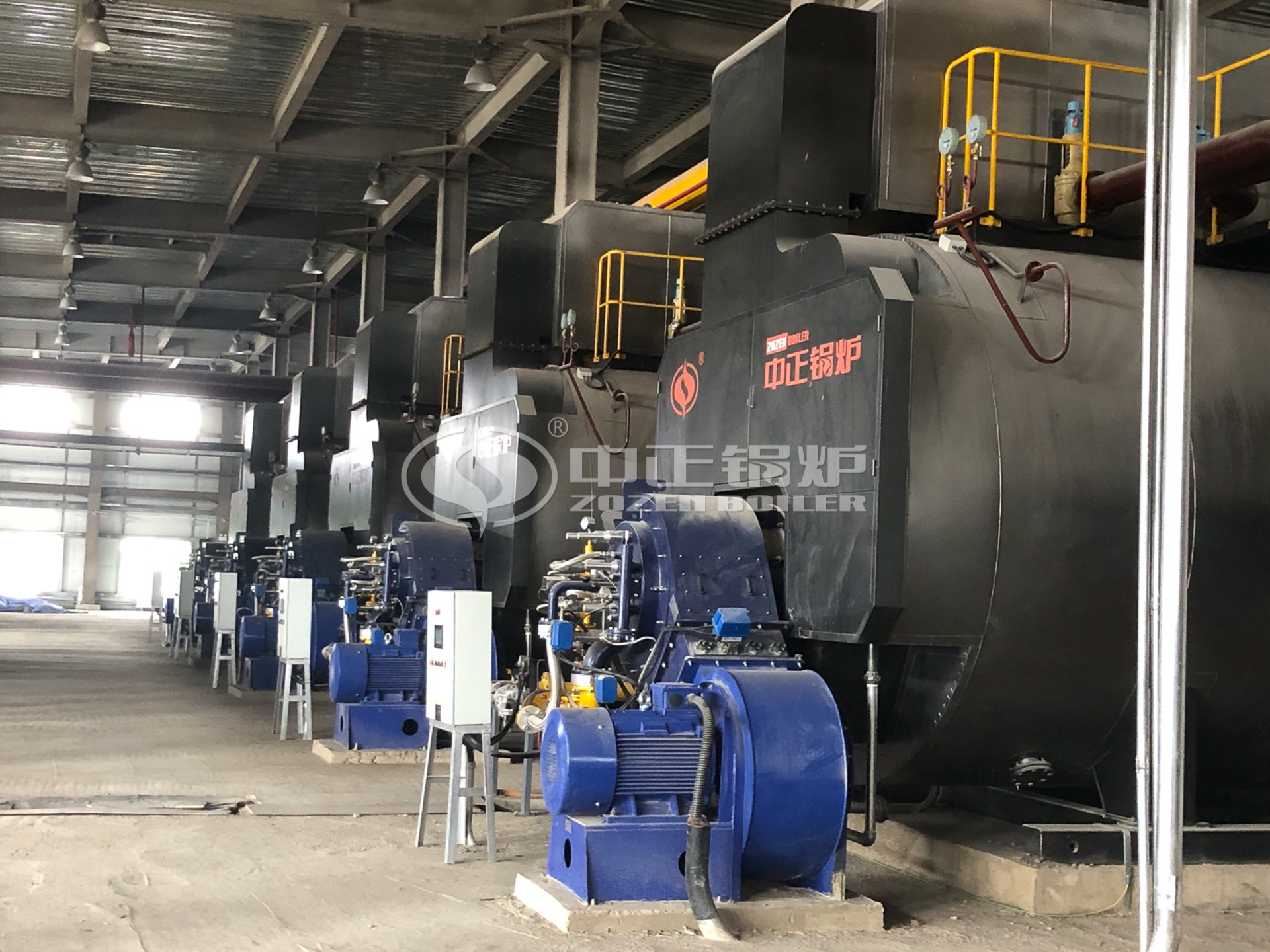
The 6 t/h WNS gas steam boiler acts as a flexible supporting unit. It primarily supplies steam to the 500-ton-per-day line or operates independently during commissioning and low-production periods. This arrangement prevents the inefficiency of running a large boiler under light load. The WNS series adopts a large-diameter corrugated furnace and threaded smoke tubes to enhance heat transfer. With a rear-end condenser installed, the system significantly reduces exhaust gas temperature and improves overall thermal efficiency. The combination of these two gas-fired steam boilers allows the enterprise to match steam generation precisely with production needs, optimizing fuel consumption and operating costs.
From an environmental perspective, the coal-to-gas upgrade delivers clear benefits. Natural gas combustion produces cleaner emissions compared to coal, helping the company reduce particulate and sulfur-related pollutants. At the same time, advanced combustion control and efficient heat recovery technology further enhance energy utilization. The new gas-fired steam boiler system not only meets environmental requirements but also improves operational stability and automation levels, reducing labor intensity.
If your company is planning a coal-to-gas upgrade or expanding food processing capacity, contact us to explore a customized gas-fired steam boiler solution that balances environmental responsibility with stable and efficient production performance.



I want to comment