 sales@zozen.com
- WhatsApp: 0086-18861589035
-
 sales@zozen.com
 Home >About
Us >News
Home >About
Us >News When plant engineers evaluate water tube vs fire tube boiler options, they are weighing two fundamentally different approaches to steam generation and the choice directly affects operating efficiency, fuel costs, and long-term reliability.
Part 1: What Are Water Tube and Fire Tube Boilers?
In a water tube boiler, water circulates inside a network of closely spaced tubes while high-temperature flue gas flows around the tubes from the outside, transferring heat through the tube walls. This design allows water to absorb heat rapidly and convert to steam at high pressure, making water tube boilers the preferred choice for large-capacity, high-pressure applications.
A fire tube boiler works the opposite way. Hot combustion gases travel inside the tubes, while water surrounds the tubes within a large outer shell, absorbing heat from the tube walls. The entire assembly is contained within a single pressure vessel, which limits the maximum pressure but simplifies the overall structure and reduces upfront cost.
The core structural difference comes down to where the water goes and where the fire goes. In any water tube vs fire tube boiler comparison, this distinction determines everything that follows: pressure capability, capacity range, start-up speed, safety characteristics, and the type of maintenance each design requires. Choosing the wrong type for your operating conditions leads to chronic efficiency losses and higher fuel bills which is why the water tube vs fire tube boiler question deserves careful analysis before any procurement decision.
Part 2: Water Tube vs Fire Tube Boiler — Key Differences
The water tube vs fire tube boiler decision becomes clearer when you examine what each design does best.
For engineering teams weighing water tube vs fire tube boiler options, the differences are straightforward. Fire tube boilers excel at simplicity and compact installation. Delivered as packaged assemblies, these units install quickly. The large water volume provides excellent steam buffer capacity for stable pressure under fluctuating load. For small-to-medium capacity plants, fire tube designs offer the most cost-effective entry point.
Water tube boilers are built for scale. In the water tube vs fire tube boiler discussion, this design’s strengths become most apparent at high capacity and high pressure. Each small-diameter tube contains only a small water volume, substantially reducing rupture risk versus a full-shell failure. The water tube architecture scales to very large capacities and operates at pressures and temperatures that would exceed a fire tube design’s mechanical limits. For high-pressure superheated steam, water tube is often the suitable option.
Start-up also differs: fire tube boilers have longer cold-start times due to their large water volume, while water tube boilers reach operating pressure more quickly.
Part 3: ZOZEN Fire Tube and Water Tube Main Product Series
A proper water tube vs fire tube boiler evaluation must consider not just the theory, but the actual equipment available. ZOZEN manufactures both fire tube and water tube designs, giving engineering teams the flexibility to specify the optimal configuration for each project.
Fire Tube Boiler
WNS series gas-fired (oil-fired) steam boiler
The WNS series steam boiler adopts a three-pass wet-back structure in which the flame is full of the wave furnace and transfer heat via furnace wall, this is 1st pass; the high temperature smoke is collected in reversal chamber and then enters 2nd pass which is grooved tubes bundle area; after heat convection, air temperature gradually falls and goes to front smoke box and turn to 3rd pass. The corrugated furnace design increases both heating surface area and furnace flexibility, reducing thermal stress during thermal cycling. A large-diameter corrugated furnace also lowers NOx formation by creating a more uniform temperature field. The threaded smoke tubes raise the heat transfer coefficient to 1.4× that of standard smooth tubes, extracting more energy from the same flue gas volume. The hinged front and rear smoke boxes allow full internal access for inspection and cleaning without dismantling connected piping. It delivers 1–20 t/h of steam at 0.7–2 MPa with thermal efficiency of at least 98% and NOx emissions at or below 30 mg/Nm³.
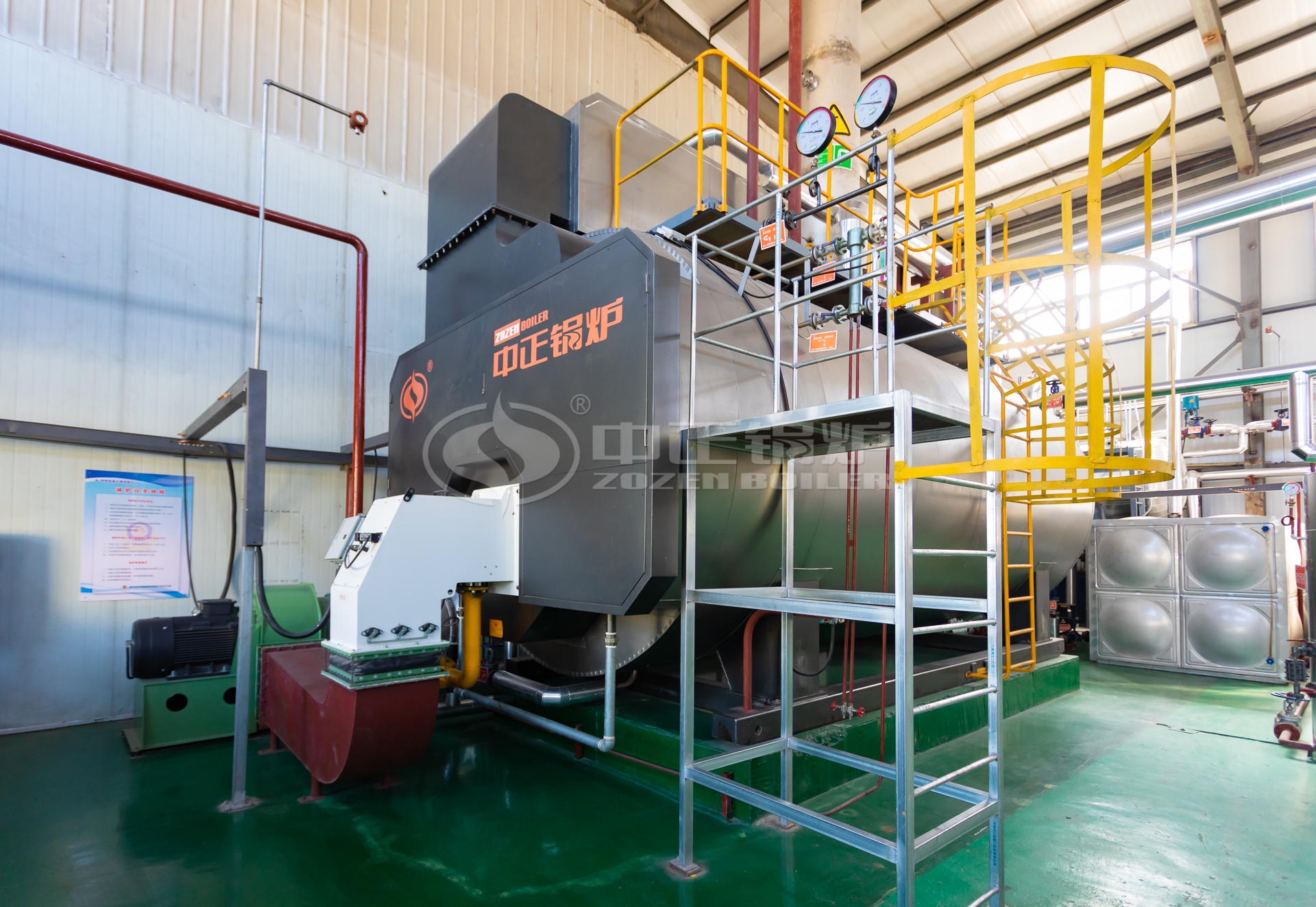
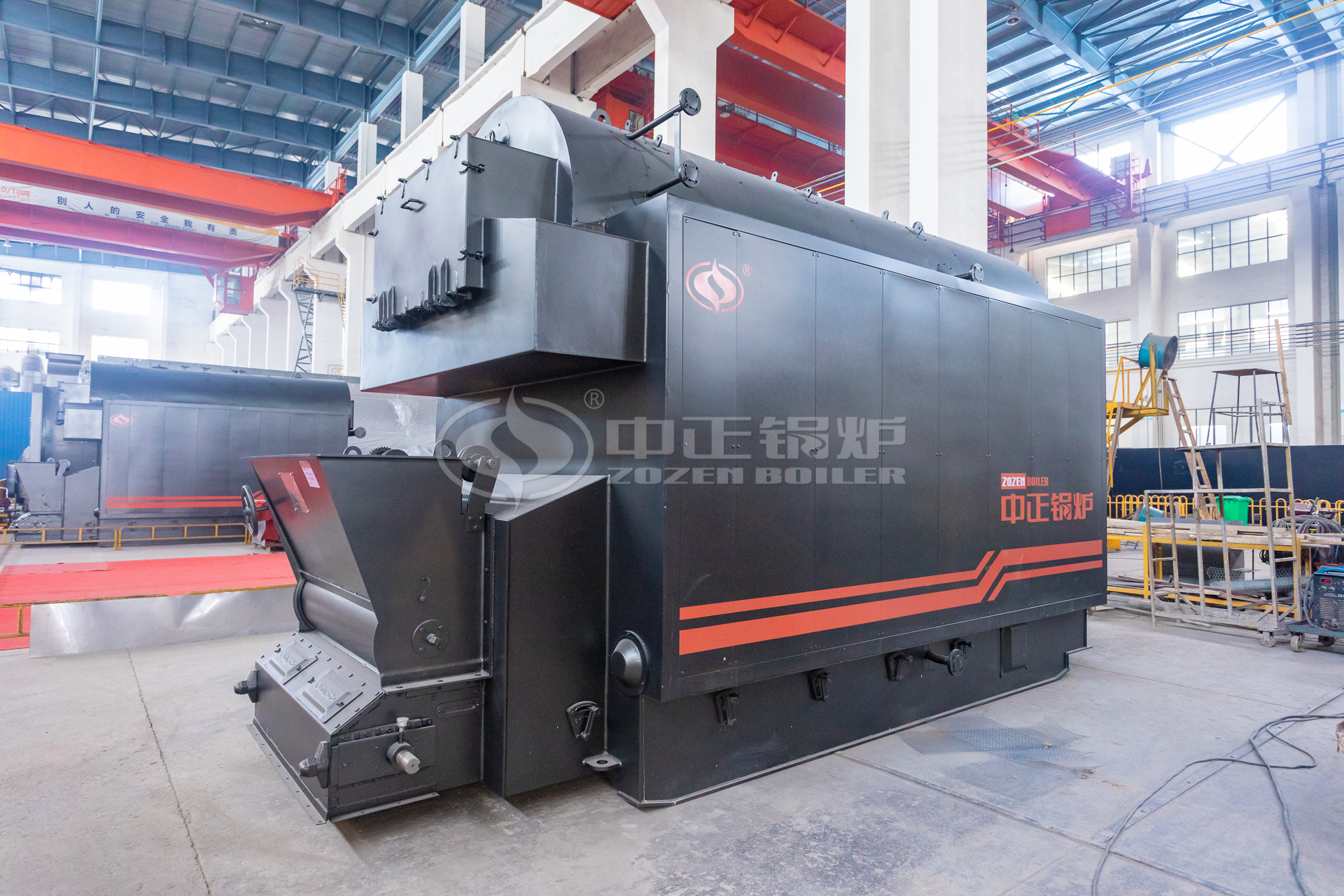
Water tube vs fire tube boiler: WNS series fire tube steam boiler
WNS series gas-fired (oil-fired) hot water boiler
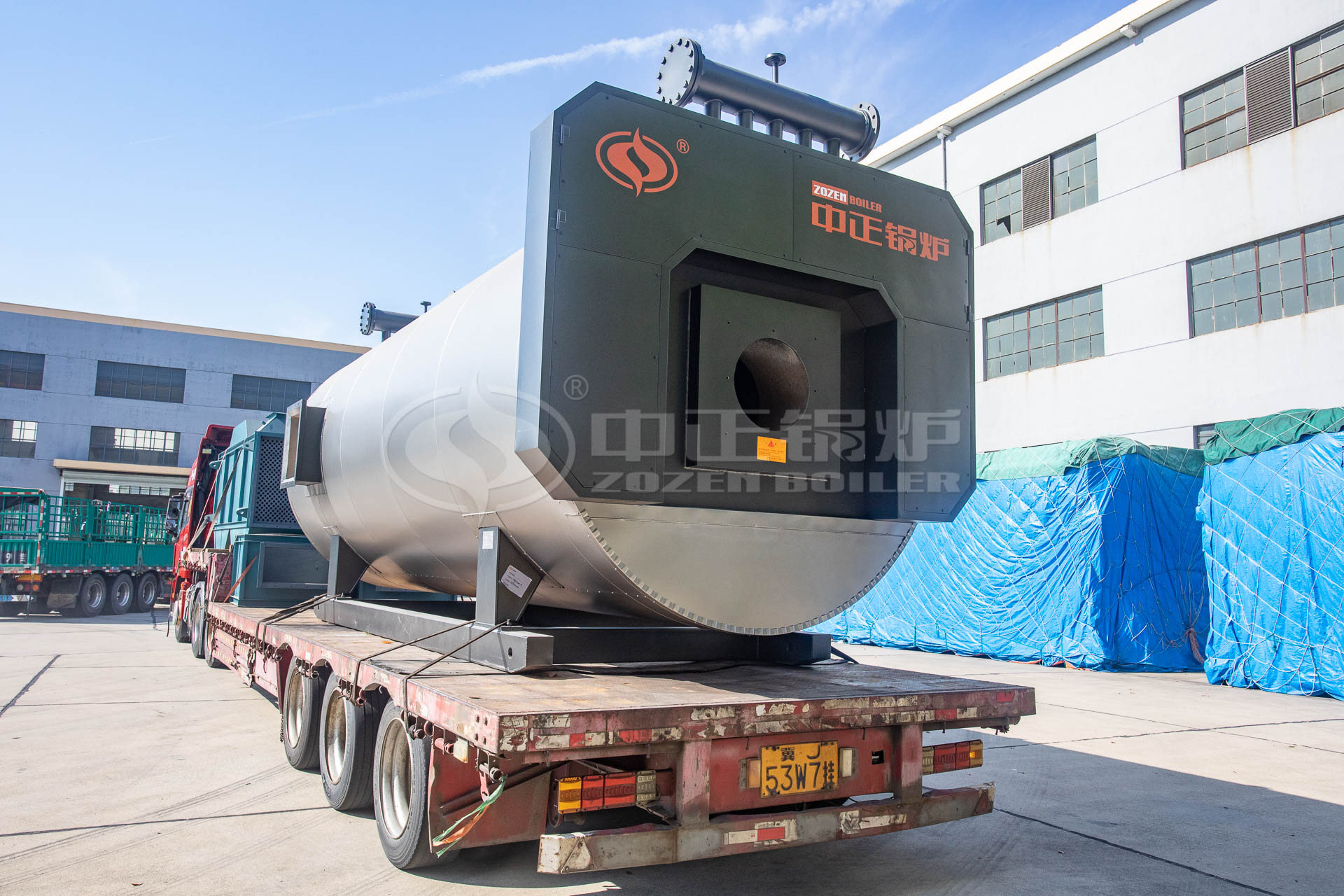
WNS hot water boiler applies the same three-pass wet-back fire tube architecture to hot water applications. Finned tubes in the convective section multiply the heat transfer surface within the same footprint, enabling higher output without increasing the overall size. The integrated economizer and condenser combination extracts both sensible and latent heat from the flue gas, pushing thermal efficiency beyond 95%. With thermal power ranging from 0.7 to 14 MW at working pressures between 0.7 and 1.25 MPa and output water temperatures up to 115°C, this unit is well-suited to district heating, hotels, hospitals, and indoor swimming pools.
Water Tube Boiler
SZS series gas-fired (oil-fired) steam boiler
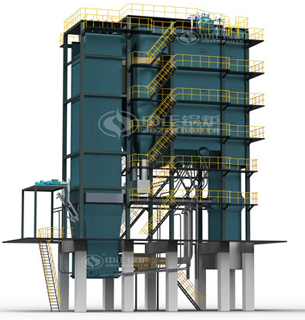
On the water tube side of the water tube vs fire tube boiler comparison, the SZS series represents ZOZEN’s high-capacity offering. The SZS series steam boiler features a double-drum, longitudinal “D-type” layout in which the furnace sits on one side and the convection tube bundle on the other, all fully enclosed by membrane water walls that eliminate the need for refractory and reduce heat loss. The membrane wall construction also simplifies on-site installation and improves overall safety by containing the fire within a fully water-cooled envelope. It provides 2–110 t/h at 1.25–5.3 MPa with steam temperatures from 194 to 540°C for superheated applications, and achieves thermal efficiency reaching 98% or higher.
SZL series biomass-fired steam boiler
For biomass applications, the water tube vs fire tube boiler choice often depends on fuel characteristics and capacity range. SZL biomass steam boiler is a double-drum, vertical-layout water tube boiler with the furnace front wall and side walls fully water-cooled, which improves combustion stability and reduces the need for refractory lining. Independent air chambers beneath the chain grate allow precise air distribution to match different biomass combustion characteristics, from low-ash wood chips to high-ash rice husks. It delivers 6–35 t/h at 1–2.5 MPa with steam temperatures from 184 to 350°C and a thermal efficiency above 86%.
DZW series biomass-fired reciprocating grate steam boiler
DZW biomass steam boiler employs a reciprocating grate designed specifically for high-moisture, loosely packed biomass fuels that do not feed reliably on a chain grate. The reciprocating grate motion continuously renews the fuel bed, sheds ash automatically, and introduces primary air through the grate itself, which is critical when burning fuels with high moisture or high ash content. The boiler proper uses a three-drum assembly structure with a sufficiently tall furnace to accommodate unshaped biomass fuels, and an ash-blowing device allows online cleaning without shutdown. It offers 15–35 t/h at 1.25, 1.6, or 2.5 MPa with thermal efficiency above 86.7%.
Part 4:How to Choose: Application Scenarios and ZOZEN’s Strength
The water tube vs fire tube boiler question is best answered by looking at your actual operating scenario.
Choose a fire tube boiler when your required capacity is in the small-to-medium range, your working pressure is moderate, you value fast installation and a lower capital cost, and your fuel is clean natural gas, biogas, or oil. These units are especially well-suited to food processing, hospitals, hotels, and light industrial heating.
Choose a water tube boiler when your capacity requirement exceeds what a fire tube shell can safely deliver, you need high pressure or superheated steam, your fuel is variable or high-ash, or you anticipate future capacity expansion. Power generation, large chemical plants, paper mills, and heavy manufacturing typically fall into this category.
Of course, the final choice between a fire tube and a water tube boiler ultimately depends on your specific operating conditions, fuel availability, steam demand profile, and budget constraints. Every plant has unique requirements — some prioritize low initial investment, others focus on long-term fuel savings, and many must meet strict emission regulations. That is why a one-size-fits-all recommendation rarely works. The best approach is to consult with experienced boiler engineers who can analyze your application, calculate your actual steam load, evaluate your fuel options, and then recommend the most suitable boiler type for your facility. Whether you need a compact fire tube boiler for a small food plant or a high-capacity water tube boiler for a chemical complex, making the right selection requires balancing technical feasibility, operational efficiency, and total cost of ownership over the equipment's entire lifecycle.
Regardless of which side of the water tube vs fire tube boiler debate fits your plant’s needs, ZOZEN’s advantage is clear: ZOZEN manufactures both fire tube and water tube boilers in its own facilities, which means the recommendation is driven by your process requirements rather than by a limited product lineup. With ASME, CE, and other international certifications, and a project portfolio spanning Asia, Africa, Europe, and the Americas, ZOZEN brings both the technical range and the field experience to support your water tube vs fire tube boiler decision with confidence.



I want to comment